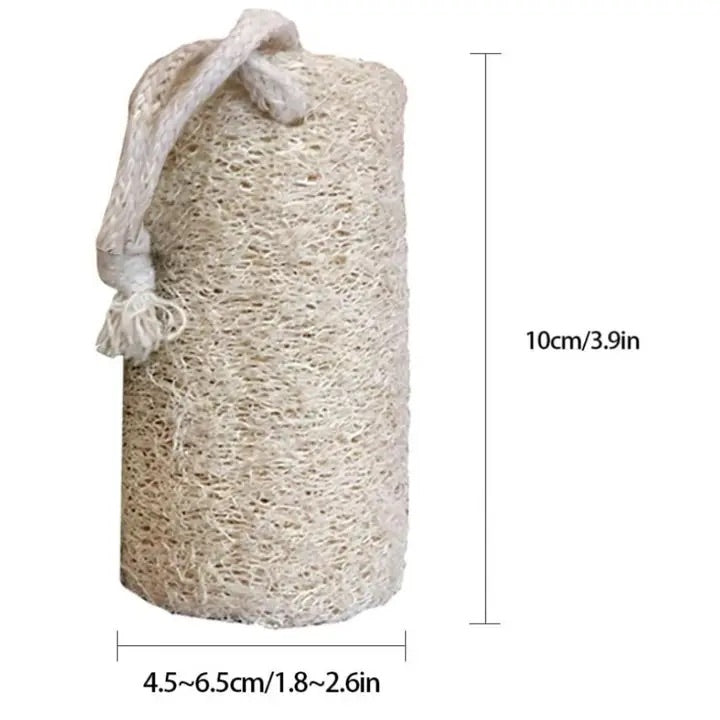
Natural Loofah Exfoliating Sponge Pad
Natural Loofah Exfoliating Sponge Pad
By Jungle Culture
Couldn't load pickup availability
The natural loofah is one of those objects that does several jobs well without asking anything complicated in return. In the shower it exfoliates and cleanses. In the kitchen it scrubs pots and surfaces. At the end of its life it composts. This one from Jungle Culture is grown from the loofah plant, a member of the cucumber family, dried and cut into a pad-sized piece that sits comfortably in the hand and works harder than its simple appearance suggests.
Key Facts
- Single natural loofah pad
- Dimensions: approximately 6.4 x 5.1 x 5.1 cm
- Weight: 40g
- 100% plant-derived loofah fibre
- Organic, plastic-free, vegan
- Compostable at end of life
- Plastic-free recyclable packaging
What Loofah Actually Is
Despite its texture, loofah is not a sea creature. It is the dried interior of the loofah fruit (Luffa cylindrica), grown on vines across tropical and subtropical regions. When the fruit ripens and is harvested, the flesh is removed and the fibrous inner skeleton is dried, revealing a natural mesh structure that is firm, absorbent, and surprisingly durable. The result is a scrubbing material that has been used in bathrooms and kitchens for centuries, long before synthetic alternatives existed.
What This Isn't
Loofah is firm enough to provide genuine exfoliation on the body and effective scrubbing in the kitchen, but it is not a heavy-duty scourer. For very tough burnt-on residue on pans, the coconut coir side of a dual-sided sponge is more appropriate. For the face, loofah is generally too coarse for sensitive or reactive skin and is better suited to body use.
Natural loofah will soften with use and moisture over time, which is normal. Rinsing thoroughly and allowing it to dry between uses extends its life considerably. Like all natural fibres, it will eventually break down, which is the point.
How to Use It
In the shower or bath: wet the loofah thoroughly before use, which softens the fibres and makes it more comfortable on the skin. Apply body wash or soap directly to the loofah or to the skin, then work in circular motions. It provides a more thorough exfoliation than a standard flannel and a more textured cleanse than a plain sponge. Suitable for most body areas; avoid using on the face or on broken or very sensitive skin.
In the kitchen: use on pots, pans, ceramic hobs, tile surfaces, and sinks where moderate scrubbing is needed. Cut the loofah into smaller pieces with scissors for more targeted use on specific areas or to fit different hands. A smaller piece also makes a useful pot scrubber that can be composted when worn out.
After each use: rinse thoroughly under running water and squeeze out excess moisture. Leave to dry in a well-ventilated spot rather than enclosed in a wet shower caddy. Drying between uses is the most effective way to extend the loofah's life and keep it hygienic.
Perfect For
- Daily body exfoliation in the shower or bath
- Scrubbing pots, pans, tiles, and kitchen surfaces
- Anyone wanting a single natural tool that works across bathroom and kitchen
- Cutting into smaller pieces for different tasks or to share
- Those replacing synthetic foam sponges and plastic scourers
- Pairing with a natural soap bar for a plastic-free shower routine
What Makes This Different
Synthetic foam sponges and plastic scourers shed microplastic fibres into water throughout their use and do not biodegrade at end of life. This loofah does neither. It is a plant fibre that works effectively, composts at the end of its life, and requires no plastic at any stage of its production or disposal. Cutting it into smaller pieces also makes it one of the more cost-effective natural scrubbing options available.
Additional Product Details
- Material: natural loofah (Luffa cylindrica) plant fibre
- Dimensions: approximately 6.4 x 5.1 x 5.1 cm
- Weight: 40g
- Organic, plastic-free, vegan, cruelty-free, ethically sourced
- Plastic-free recyclable packaging
- End of life: home compostable
Not recommended for use on the face or broken skin. Not suitable for highly polished or lacquered surfaces where abrasion may cause damage. Test on an inconspicuous area first if unsure about surface compatibility.
Share