

Microgreens Growing Kit for Kids | 15 Grows
Microgreens Growing Kit for Kids | 15 Grows
By Getting People Growing
Couldn't load pickup availability
Microgreens Kit That Kids Can Actually Grow Successfully
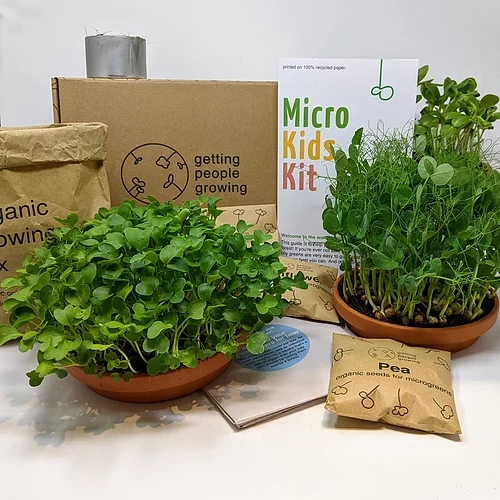
A complete growing kit designed specifically for children, with everything needed for 15 full grows of microgreens. Smaller terracotta trays sized for children's hands, straightforward instructions with pictures, and varieties that germinate reliably. Ready to harvest in 7 days.
This isn't one of those "educational" kits where nothing actually grows and the child loses interest immediately. These genuinely work. The instructions are clear enough for children to follow independently (with initial adult supervision), and microgreens are forgiving enough that minor mistakes won't ruin the whole project.
What's in the Kit
- 15 grows of organic seeds (child-friendly varieties selected for reliable germination)
- 15 grows of organic grow mix (made from recycled materials)
- Small terracotta planting trays (appropriately sized for children)
- Easy-to-follow grow guide with pictures (printed on recycled paper)
- Measuring scoop (recycled)
- Seed covers (recycled)
All packaging and materials are plastic-free. Seeds remain viable for approximately 2 years.
Why This Works for Children
Seven days from planting to harvest means children see results before they forget they planted anything. This is crucial. Traditional gardening projects stretch over weeks or months, by which point most children have completely lost interest.
Microgreens provide near-instant gratification: visible sprouting within 2-3 days, recognisable plants within 5 days, edible greens by day 7. Children can check progress daily and see actual change, which maintains engagement.
The smaller trays are genuinely sized for children's hands. Adult-sized trays are awkward for small hands to manoeuvre, water evenly, or harvest from. These proportions actually work for the age group.
Educational Value
Children learn the complete plant growth cycle in one week: seed, germination, seedling, harvest. They understand watering requirements, light needs, and how plants respond to their environment. The rapid timeline means they can experiment with variables and see results quickly.
The nutritional aspect provides genuine science education. Children can compare nutrient density between microgreens and mature vegetables, understand concentration of vitamins, and learn about plant compounds like polyphenols and antioxidants in age-appropriate terms.
Fifteen grows means multiple experiments. They can test different watering schedules, compare light levels, try staggered planting, or conduct parallel grows with varied conditions. This is proper experimental method, not just following instructions once.
Getting Children to Eat Greens
Children are considerably more likely to eat vegetables they've grown themselves. Not guaranteed, but significantly more likely. There's ownership involved, plus the novelty factor of eating something they produced.
Microgreens have milder flavours than mature vegetables, which helps. Pea shoots are sweet, many varieties are subtle enough to add to sandwiches without protest. Starting with the mildest varieties and progressing to stronger flavours works better than forcing kale microgreens immediately.
Let children harvest their own portions. Cutting greens with proper scissors (supervised) and choosing how much to add to their plate gives them agency over their food, which reduces resistance.
Practical Considerations for Parents
You'll need to supervise initially to establish the routine. Once children understand the daily watering check and how to identify when more water is needed, many can manage independently depending on age and responsibility level.
Have realistic expectations about consistency. Some children will diligently check their trays every morning for months. Others will be intensely engaged for two grows then lose interest. Both outcomes are normal.
The kit contains 15 grows, which provides extended engagement even if children don't grow continuously. They can take breaks and return to it when interest resurges.
Growing Year-Round
Indoor growing means seasonality doesn't matter. Children can start this project in January as easily as June. No weather dependency, no "wrong time of year" to begin. This makes it practical for birthday gifts or Christmas presents that can be used immediately rather than waiting months for appropriate outdoor conditions.
The Honest Limitations
Microgreens require daily attention. If your child forgets about them for three days, they'll dry out and die. This isn't necessarily bad—understanding consequences of neglecting living things has educational value—but don't expect perfect success rates initially.
Younger children will need adult involvement. The instructions are clear, but reading comprehension and fine motor skills vary considerably by age. Five-year-olds will need substantially more help than ten-year-olds.
Storage matters. Organic seeds in a damp bathroom cupboard won't remain viable for two years. Store the kit components somewhere dry and moderate temperature if you're not using all 15 grows immediately.
Safety Notes
Terracotta trays can chip if dropped. They're not particularly fragile, but they're ceramic. Treat accordingly.
Harvesting requires scissors. Age-appropriate supervision applies.
The organic grow mix is soil-like material. Children will get their hands dirty. This is generally considered desirable but worth noting if you have fastidious children who dislike mess.
About Getting People Growing
Getting People Growing creates kits specifically designed to work, particularly for people who assume they can't grow anything. Their children's kit removes the common failure points: unclear instructions, inappropriate sizing, varieties requiring expert timing. Everything is optimised for actual success rather than looking impressive on the shelf.
Share