Love in the Mist | Romantic garden | Mini Grow Kit
By The Plant Gift Co.
Couldn't load pickup availability
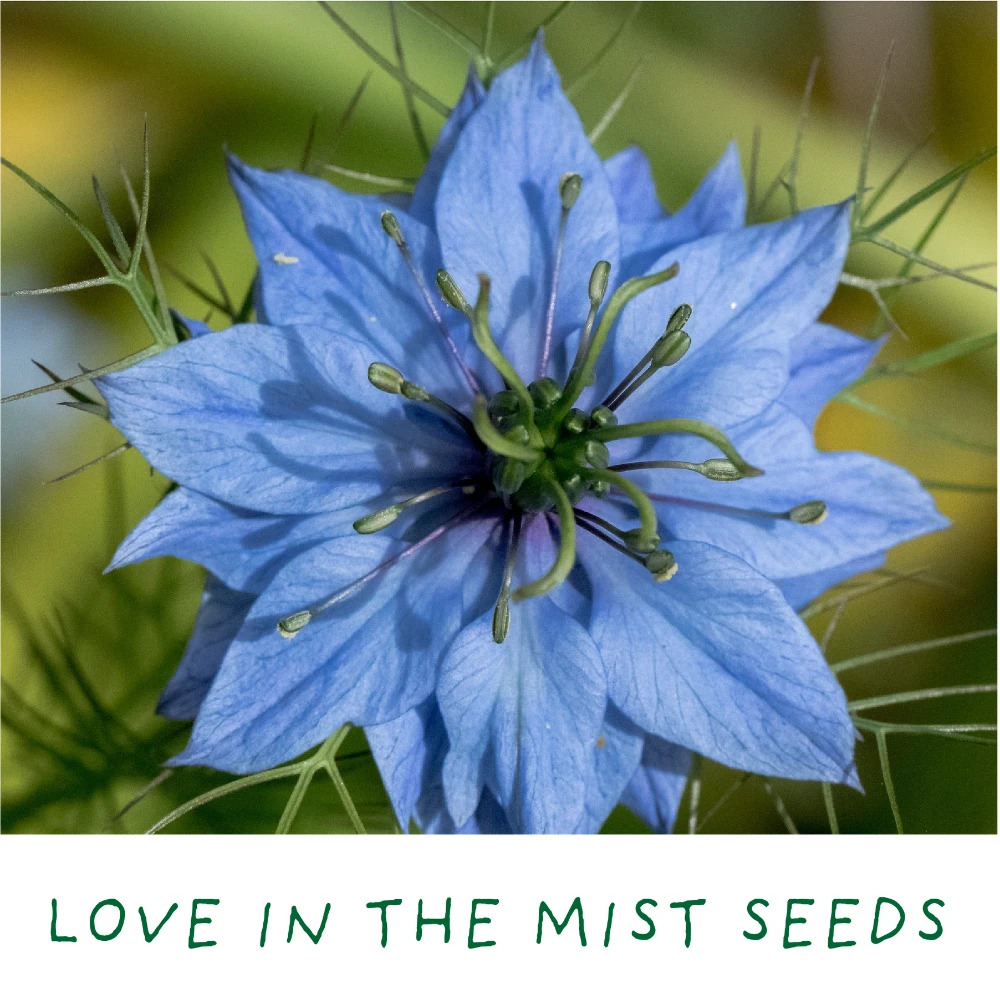
Few cottage garden flowers have the quiet presence of love-in-a-mist. The delicate blue blooms of Nigella damascena sit suspended in a haze of fine, feathery foliage that gives the plant its common name, and the whole effect is one of effortless, slightly wild beauty that suits both formal borders and relaxed cutting gardens. This compact kit from The Plant Gift Co. contains everything needed to grow them from seed, with enough for several sowings and a guide written for growers at any level of experience.
Key Facts
- Contains love-in-a-mist seeds (Nigella damascena), sufficient for several sowings
- Coir soil discs included: just add water to activate
- Wooden plant markers included
- Step-by-step beginner's sowing guide included
- Plastic-free, recyclable packaging
- Hardy annual: sow spring or autumn in the UK
- Seeds batch-tested for germination quality
- By The Plant Gift Co.
About Love in a Mist
Nigella damascena is a hardy annual native to southern Europe and North Africa, naturalised in British gardens since at least the sixteenth century. The name damascena refers to Damascus, reflecting its historic trade routes through the Middle East, though the flower has been woven into English cottage garden planting for so long that it feels entirely at home here. It grows quickly, self-seeds freely once established, and asks very little in return for a generous display each summer.
The flowers are typically a soft, clear blue, though seed-grown plants can also produce white and pale pink forms within the same packet. Each bloom is surrounded by a fine ruff of thread-like bracts, the "mist" that gives the plant its name, and the combination of delicate flower and intricate foliage gives it a quality that is difficult to achieve with bolder, more architectural plants. In a vase or border, love-in-a-mist brings lightness and a sense of informality that contrasts well with more structured planting.
The seed pods that follow the flowers are one of the plant's most distinctive features: inflated, papery capsules striped with deep red and purple, held on stiff stems above the foliage. They dry beautifully on the plant and cut well for dried arrangements, extending the season's interest well beyond the flowering period. Leaving the pods on the plant also allows them to shed seed naturally, which is how love-in-a-mist earns its reputation for returning year after year with minimal intervention.
The coir discs included in the kit are compressed coconut fibre that activates quickly with water, expanding into a clean, free-draining growing medium suited to seed germination. They make the kit self-contained and easy to use without sourcing additional compost, and their lightweight, compact form makes this a practical gift to send or carry.
What This Isn't
Love-in-a-mist does not transplant well. The taproot is easily disturbed, and plants moved after germination rarely establish as well as those sown where they are to grow. This means the kit works best when the seeds are sown directly into a border, a container that will remain in place, or a seed tray with the intention of transplanting very early, before the taproot develops. It is not a good choice for starting in small modules and pricking out later in the season.
The flowers are relatively short-lived individually, typically lasting a week or so before being replaced by seed pods. The display is extended by the succession of new buds opening over several weeks, but this is not a flower that holds a single bloom for a long time. Staggered sowings every few weeks through spring will maintain a longer flowering season than a single sowing.
Whilst love-in-a-mist is a hardy annual and tolerates light frost as a seedling, the seeds themselves need reasonable soil temperatures to germinate reliably. Very cold, wet spring soil will slow or prevent germination. An early autumn sowing, allowing plants to establish before winter and flower earlier the following year, often gives better results than a late cold-spring sowing.
When It Works Best
In the UK, love-in-a-mist performs best from two sowing windows: early spring from late February through April, and early autumn in September. The autumn sowing produces larger, stronger plants that flower earlier and more prolifically the following year, as the seedlings have time to develop good root systems before the cold sets in. Spring sowings are more commonly practised and still give a reliable display, particularly in a warm, sheltered position.
As a cut flower, it is most useful from a dedicated cutting patch where you can harvest freely without stripping a border display. A row sown in a kitchen garden or along the edge of a vegetable bed provides a steady supply of both fresh flowers and drying pods through the summer.
As a gift, this kit has a natural fit for anyone who gardens, however casually. The romantic common name and the flower's long association with cottage garden planting make it a considered choice for occasions with a personal or sentimental dimension, anniversaries, housewarming gifts for a new garden, or a gift for someone who has recently taken up growing. It suits spring gifting particularly well, when the impulse to sow something is at its strongest.
How to Grow
Choose your growing position first. Because love-in-a-mist dislikes transplanting, decide where the plants will grow before you sow. A sunny spot with reasonably well-drained soil is ideal. In containers, use a good quality multipurpose compost and ensure the pot has drainage holes.
Prepare the coir disc if sowing in a pot. Place one disc in a container and add approximately 150ml of water. Allow a few minutes for it to expand fully, then loosen the surface gently with your fingers. If the centre still feels dry, add a little more water.
Sow the seeds. Scatter seeds thinly across the surface of the soil or compost. Love-in-a-mist seed is small and best not buried deeply: a very light covering of fine compost or vermiculite, just enough to anchor the seeds, is all that is needed. Press gently to ensure good contact with the soil.
Water carefully. Use a fine rose or a gentle spray to avoid disturbing the seeds. Keep the soil consistently moist but not waterlogged throughout germination. Cover with a thin layer of horticultural grit if sowing outdoors in autumn, to protect from heavy rain and slugs.
Germination. Expect seedlings to emerge within ten to fourteen days in warm conditions. In cooler autumn or early spring soils, germination may take up to three weeks. Once seedlings appear, thin them to approximately 15 to 20cm apart to give each plant room to develop. Snip thinnings at the base rather than pulling them up, to avoid disturbing neighbours.
Ongoing care. Water during dry spells, particularly for container-grown plants. No feeding is necessary for border-grown love-in-a-mist, though container plants will benefit from a light liquid feed once a month during the growing season. Deadhead spent flowers if you want to extend the flowering period, or leave them to develop into seed pods for drying and for natural self-seeding.
For dried arrangements. Cut the pods when they are fully formed but before they begin to split open. Hang in small bunches upside down in a warm, dry place for two to three weeks. The striped papery pods hold their colour and form well and last for months in arrangements.
Store unused seeds in a cool, dry place in a sealed envelope or container. Love-in-a-mist seeds remain viable for two to three years when stored correctly.
Perfect For
- Cottage garden borders where a light, informal flower is needed
- Cutting gardens and anyone who arranges flowers at home
- Dried flower arrangements: the seed pods are particularly valued
- Gardeners wanting a flower that self-seeds and returns year after year
- Thoughtful gifts for anniversaries, new homes, or anyone who gardens
- Valentine's Day or romantic occasion gifts with a botanical theme
- First-time flower growers wanting something reliable and rewarding
- Wildflower and naturalistic planting schemes alongside other annuals
- Anyone who wants to attract bees and other pollinators to their garden
What Makes This Different
Love-in-a-mist seeds are widely available, but the quality of individual seed batches varies considerably. Poor germination is the most common disappointment with flower growing from seed, and it is almost always a seed quality issue rather than a grower error. The Plant Gift Co. batch-tests its seeds before packaging, selecting for strong germination rates, which makes a meaningful practical difference to the experience of growing from this kit.
The seed quantity is also more generous than the typical single-use grow kit format. Multiple sowings are possible from one packet, which matters for a flower like love-in-a-mist where staggered sowing is the best way to extend the flowering season. It also means a failed first attempt is not the end of the story.
The self-contained format, with coir discs, markers, and a clear guide, removes the usual barrier of not knowing where to start. Everything needed is present, and the guide is written for someone who has not done this before.
Realistic Expectations
Love-in-a-mist is one of the more straightforward flowers to grow from seed, but it asks for the right conditions at the right time. Sown in cold, wet soil in a shaded position, results will be modest. Sown in a warm, sunny spot with reasonably drained soil, it is a reliable and generous plant that will reward minimal attention with weeks of flowers and months of decorative seed pods.
The blue colouring is the most common form, but seed-grown plants show natural variation and some whites and pale pinks are likely to appear alongside the blue. This is a feature rather than a flaw: the mix of tones within a planting gives the border a naturalistic quality that matches the flower's character well.
Self-seeding, once established, means that love-in-a-mist can become a reliable returning presence in a border without further intervention. This takes a season or two to establish, and the pattern of where seedlings appear each year will shift depending on where the pods shed their seed. That slight unpredictability is part of what makes it a pleasure to garden with.
What's Included
- Love-in-a-mist seeds (Nigella damascena), sufficient for multiple sowings
- Coir soil discs
- Wooden plant markers
- Step-by-step beginner's sowing guide
- Recyclable packaging
Additional Product Details
- Supplier: The Plant Gift Co.
- Variety: Love-in-a-mist (Nigella damascena)
- Plant type: Hardy annual
- Typical height: 40 to 50cm
- Flowering period: June to August (spring sown); May to July (autumn sown)
- Sowing times: Late February to April, or September
- Position: Full sun, well-drained soil
- Contents: Nigella seeds, coir discs, wooden plant markers, sowing guide
- Packaging: Plastic-free, recyclable
- Seeds batch-tested for germination quality
- Store unused seeds in a cool, dry place: viable for two to three years
Keep seeds out of reach of young children. Nigella seeds contain small quantities of alkaloids and are not intended for consumption. Wash hands after handling seeds.
Share