Compostable Kitchen Sponge | Made in the UK | ecoLiving
By ecoLiving
Couldn't load pickup availability
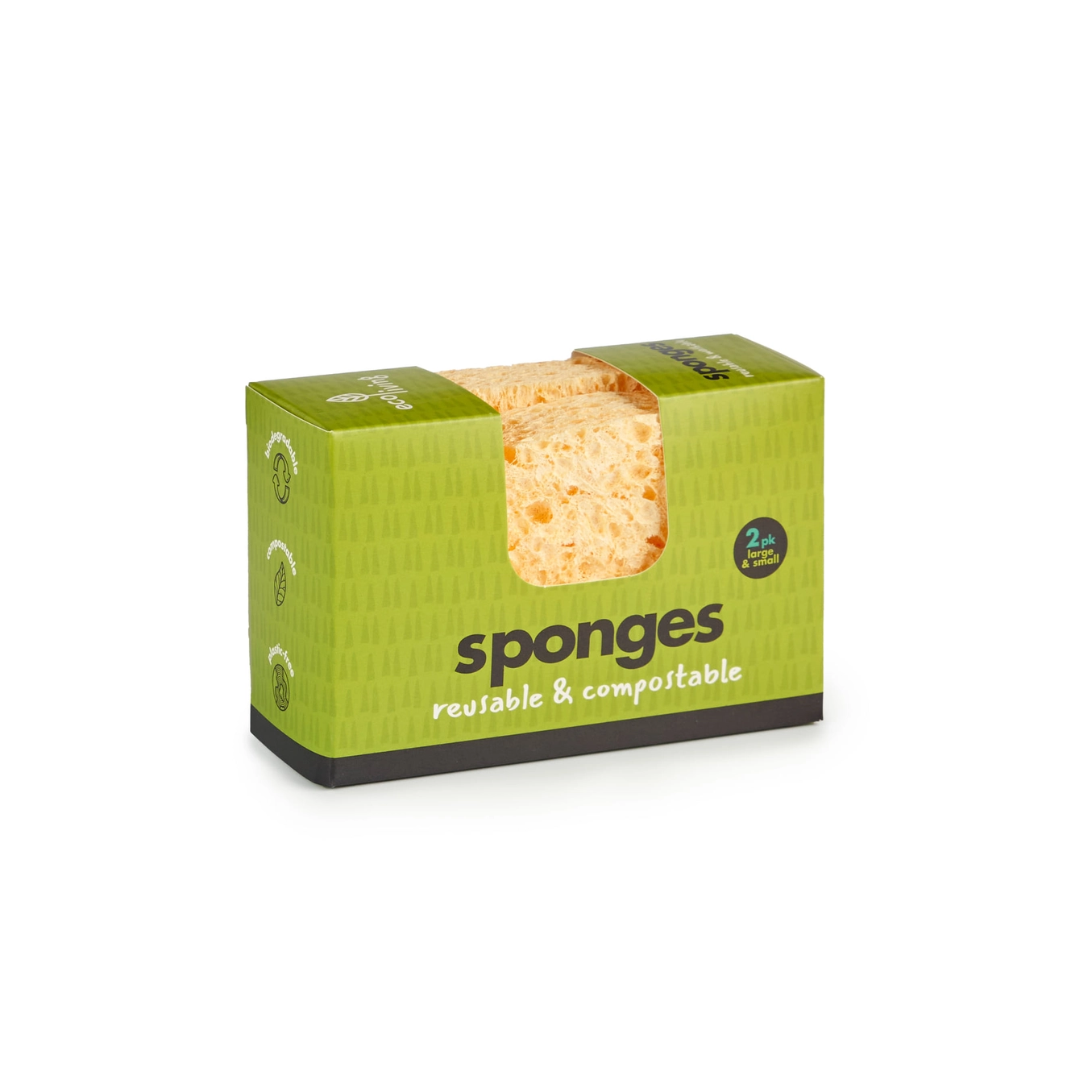
A straightforward, well-made kitchen sponge produced in the United Kingdom from cotton, wood pulp, and flax, with no plastic content anywhere in its construction. When it has done its job and needs replacing, it goes into the compost rather than landfill. Available in two shapes and as a single or 2-pack, this is the everyday sponge without the synthetic waste.
Key Facts
- Materials: cotton, wood pulp (cellulose) and flax
- 100% plastic-free throughout
- Home compostable at end of life
- Made in the United Kingdom
- FSC certified wood sources
- Does not shed microplastics
- Highly absorbent and reusable
- Large size: 120 x 80 x 25mm
- Wavy size: 100 x 80 x 25mm
- Available as single or 2-pack
- By ecoLiving
The Materials
Wood pulp cellulose forms the primary structure of the sponge. Cellulose is plant fibre derived from wood, one of the most naturally absorbent materials available and the basis of high-quality sponges long before synthetic foam became the default. It holds water well, releases it evenly as you work, and dries reasonably quickly between uses. Because it is plant-derived rather than petroleum-derived, it breaks down naturally at the end of its life without leaving synthetic residue. The wood pulp used by ecoLiving comes from FSC-certified sources, meaning the supply chain is independently audited against standards for responsible forest management.
Flax is a plant fibre cultivated in Britain and across northern Europe for thousands of years, most commonly associated with linen production. In this sponge it contributes tensile strength and durability, helping the sponge hold its form through repeated wetting, wringing, and daily use. Flax is also naturally biodegradable, consistent with the sponge's fully compostable construction.
Cotton works alongside the cellulose and flax to give the sponge a familiar, soft texture and to support its structural integrity. Together the three plant-based materials produce something that handles like a conventional sponge in daily use but behaves very differently at the end of its life.
What This Isn't
This is a soft cellulose sponge, not a dual-sided scrubbing sponge. It does not have a separate abrasive layer. It handles everyday washing up, wiping surfaces, and mopping up spills confidently, but for burnt-on residue or heavy scrubbing tasks you will need something with more abrasion, such as the Jungle Culture sisal sponge also available in this store.
It is not suitable for machine washing. Cellulose fibres do not hold up well under that level of agitation. To freshen and sanitise, rinse thoroughly after each use and allow to dry completely. For deeper cleaning, a brief soak in hot water is sufficient.
Some people cut these sponges in half, which is a practical approach given the generous size and effectively doubles how long a pack lasts. The Large size in particular is more than needed for single-handed washing up in most households.
When It Works Best
This sponge suits everyday kitchen use: washing up dishes and glassware, wiping down worktops and appliances, cleaning sinks, and mopping up spills. Its softness makes it safe on non-stick coatings, enamel, ceramic, and glass without risk of scratching. It works equally well in the bathroom on tiles, taps, and surfaces where a gentle, absorbent tool is all that is needed.
The Wavy shape fits comfortably around curved surfaces and into mugs and bowls. The Large shape covers more area for flat surfaces and bigger items. Both are the same material and the same thickness; the choice is simply about what you wash most often.
As a first switch away from conventional foam sponges, this is one of the most direct replacements available. The format is familiar, the price point is accessible, it is made in the UK, and it composts when worn out. For anyone who wants to make the switch without changing how they clean, it removes most of the barriers.
How to Use and Care For It
Before first use: dampen the sponge under warm water. Cellulose sponges are often supplied in a compressed or partially dried state and expand slightly when wet. This is normal.
For daily washing up and surface cleaning: use with your usual washing-up liquid or surface cleaner. The cellulose absorbs and holds the solution well, and works effectively on non-stick pans, glassware, and all everyday surfaces.
After each use: rinse thoroughly under running water and squeeze out as much moisture as possible. Leave to dry upright rather than lying flat on the sink. Drying between uses is the single most important habit for extending the sponge's life and keeping it fresh.
To freshen: soak briefly in recently boiled water or rinse under very hot running water. This is sufficient to sanitise the fibres for everyday use. Do not put in the washing machine.
Cutting in half: if the size is more than you need, cutting the sponge in half with a sharp knife before first use is a practical option that doubles how long a pack lasts without affecting how it performs.
At end of life: cut into small pieces to speed up breakdown, then add to a home compost bin or a council food and garden waste collection. All three materials are fully compostable and will break down without leaving harmful residues.
Perfect For
- Replacing conventional plastic foam sponges with a compostable UK-made alternative
- Everyday washing up across crockery, glassware, and non-stick cookware
- Wiping down worktops, tiles, sinks, and bathroom surfaces
- Anyone concerned about microplastics shed by conventional foam sponges
- Anyone with a home compost bin wanting to close the loop on kitchen consumables
- Those who want a familiar sponge format without changing cleaning habits
- Anyone looking for a UK-made product with transparent, certified materials
What Makes This Different
Made in the United Kingdom, which is genuinely uncommon in the sponge category. Most kitchen sponges, including many sold as natural or compostable, are manufactured overseas. UK manufacturing gives ecoLiving direct oversight of production and a shorter supply chain from raw material to finished product.
The FSC certification on the wood pulp is a specific, independently verified claim rather than a general statement about natural materials. It means the cellulose in this sponge can be traced back to forests managed according to audited standards for responsible forestry, worker rights, and supply chain transparency.
It is also worth being clear about how this sits alongside the Jungle Culture sisal sponge elsewhere in this store. They are different tools for different needs. This ecoLiving sponge is a soft, single-material sponge suited to everyday washing up and surface cleaning. The Jungle Culture sponge is dual-sided with a firm sisal scrubbing surface for tougher jobs. Both are plastic-free and compostable; the right choice depends on what you need it to do.
Realistic Expectations
With daily use and proper drying between uses, expect four to six weeks from each sponge. People who cut them in half before use naturally get longer from each pack. The sponge will gradually soften over its life, which is normal for cellulose. Once it begins to thin or fall apart at the edges, it is ready to compost.
The most common reason cellulose sponges deteriorate faster than expected is being left wet. A sponge that sits damp on the side of the sink will develop odours and break down more quickly than one that dries properly between uses. Squeezing it out and standing it up to dry after each use makes a meaningful difference to how long it lasts.
Additional Product Details
- Supplier: ecoLiving
- Made in: United Kingdom
- Materials: cotton, wood pulp cellulose, flax
- Certifications: FSC certified wood sources
- Plastic-free throughout; does not shed microplastics
- Home compostable at end of life
- Large size: 120 x 80 x 25mm
- Wavy size: 100 x 80 x 25mm
- Available options: Large Single, Wavy Single, 2 Pack Wavy, 2 Pack Large, 1 Wavy + 1 Large
- Care: rinse and dry after each use; do not machine wash
Suitable for use on non-stick, enamel, ceramic, and glass surfaces. Not suitable for machine washing. Keep out of reach of young children.
Share