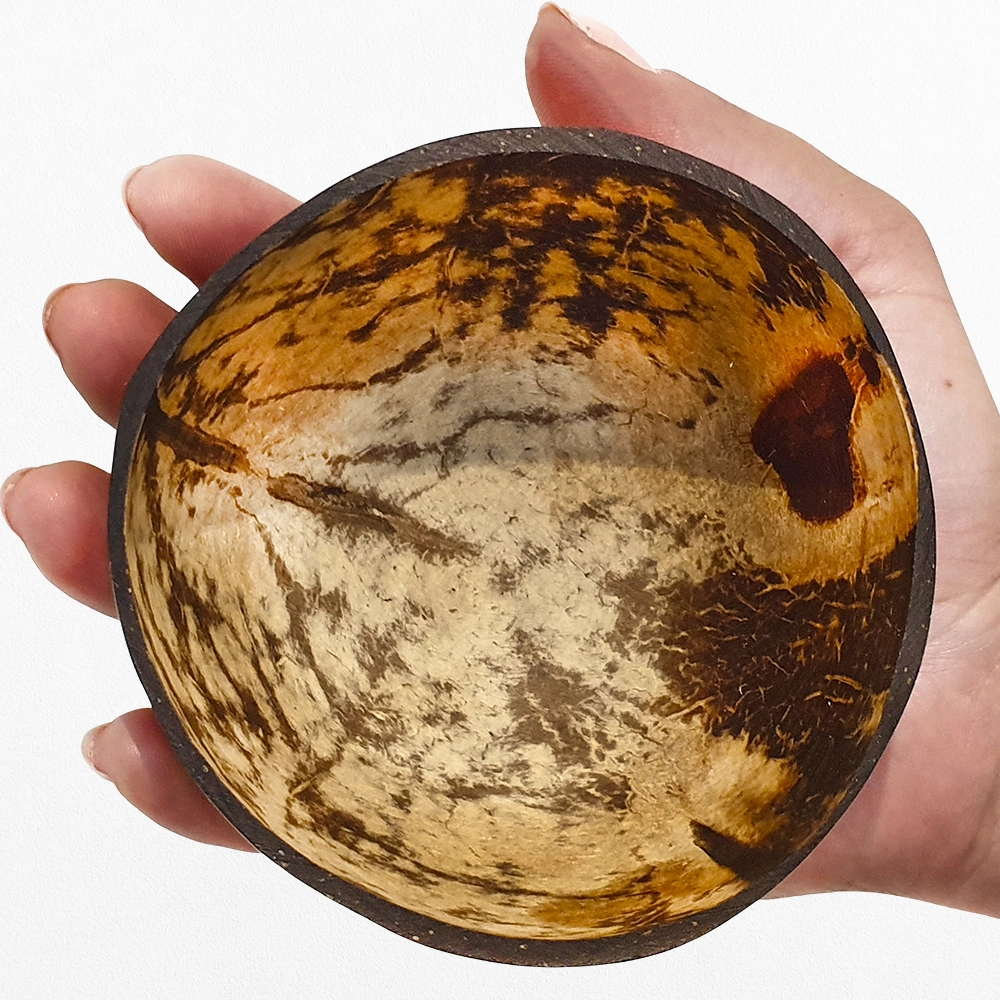


Polished Coconut Bowl
Polished Coconut Bowl
By Vie
Couldn't load pickup availability
Every coconut shell is different. The natural grain, colour variation, and organic shape mean no two of these bowls are identical. That's not a compromise: it's the entire point. This is tableware that celebrates natural materials rather than hiding them.
Handcrafted in Indonesia from upcycled coconut shells that would otherwise be waste, each bowl is cleaned, polished, and finished to reveal the beautiful texture of the coconut. Available in three sizes to suit different uses, from breakfast bowls to serving dishes, these bowls bring warmth and character to any table.
Key Facts:
- Handcrafted from upcycled coconut shells
- Three sizes: Small (8-11cm), Medium (11-12cm), Large (13-15cm)
- Natural polished finish reveals coconut texture
- Each bowl is unique with individual grain patterns
- Sustainable alternative to ceramic or plastic bowls
- Lightweight and durable for daily use
- Made in Indonesia by skilled artisans
Why Natural Coconut Works
Genuinely sustainable: These bowls are made from shells that would otherwise be discarded after coconut processing. Rather than creating new materials, this uses waste that already exists. The shells are cleaned, shaped, and polished: no synthetic materials, no chemical processing, just natural coconut transformed into functional tableware.
Beautiful variations: The natural grain of coconut shell creates patterns that vary from bowl to bowl. Some show dramatic swirls, others have subtle striations. The colour ranges from rich brown to lighter tan, sometimes within the same bowl. This variation is what makes natural materials interesting: no factory uniformity, just organic beauty.
Lightweight durability: Coconut shell is surprisingly strong despite being lightweight. These bowls can handle daily use without the weight or fragility of ceramic. They're practical for breakfast bowls, serving dishes, or decorative use.
Natural insulation: The shell material provides some insulation, staying cooler to the touch than ceramic with hot contents and not condensing as much moisture with cold foods. This makes them comfortable to hold and use.
Warm aesthetic: The natural brown tones and organic texture bring warmth to table settings. They work equally well for casual everyday use or more considered presentation. The natural material feels honest and unpretentious.
Understanding the Sizes
Small (8-11cm diameter): Perfect for dips, sauces, nuts, or small snacks. Also works beautifully as a decorative bowl for jewellery, keys, or bathroom items. The compact size makes these versatile around the home.
Medium (11-12cm diameter): The breakfast bowl size. Ideal for porridge, yoghurt and granola, smoothie bowls, or small salads. Also works for side dishes, desserts, or serving condiments. This is probably the most versatile size for daily use.
Large (13-15cm diameter): Proper serving bowls for salads, pasta, rice dishes, or substantial breakfast bowls. These make an impact as serving dishes whilst remaining comfortable to handle. Good for sharing platters or individual generous portions.
The size ranges account for natural variation in coconut shells. Your small bowl might be 8cm or 11cm: the exact size depends on the shell it's made from. This variation is part of using natural materials.
How They're Made
After coconuts are processed for their meat and water, the shells typically become waste. These bowls give those shells purpose.
Artisans in Indonesia clean the shells thoroughly to remove any residue. The shells are then shaped and smoothed, working with the natural form rather than forcing uniformity. Rough edges are refined, the interior is smoothed for comfortable use.
The polishing process brings out the natural beauty of the coconut shell. Rather than adding finishes or coatings that might chip or wear, the shells are polished to reveal their inherent texture and colour. This creates the smooth, pleasant-to-touch surface whilst keeping the material pure.
Each bowl requires handwork to assess the shell's individual characteristics and bring out its best qualities. This artisan approach means genuine craftsmanship rather than industrial production.
Using and Caring for Coconut Bowls
Daily use: These bowls work for breakfast, snacks, serving, or decorative purposes. They're light enough for children to handle safely and durable enough for regular use.
What to serve: Perfect for dry or room-temperature foods: granola, fruit, salads, pasta, rice dishes, snacks. Fine for cooler foods like yoghurt or smoothie bowls. Avoid very hot liquids or foods that might damage the natural material over time.
Cleaning: Hand wash only with warm water and mild soap. Don't put in the dishwasher: the heat and harsh detergents can damage the natural material. Rinse promptly after use and dry thoroughly.
Drying: Don't leave sitting in water or wet for extended periods. Pat dry with a towel after washing and allow to air dry completely. This prevents the natural material from degrading.
Maintenance: If the bowl starts looking dry or less lustrous, rub with a small amount of coconut oil or food-safe mineral oil. This revives the finish and protects the material. A light oiling every few months keeps them looking their best.
What to avoid: No dishwasher, no microwave, no oven. Don't use for very hot liquids or soups. Don't leave soaking in water. Avoid harsh scrubbing or abrasive cleaners that might damage the polished surface.
Longevity: With proper care, these bowls last for years. The natural material may develop a patina over time, adding character. Minor surface changes are normal and part of using natural materials.
Why Upcycled Matters
The term "upcycled" gets overused, but this is genuine: taking waste material (coconut shells) and transforming it into something more valuable (functional tableware). No new resources required, just better use of what already exists.
Coconut shells are hard, durable, and naturally water-resistant, but they're typically discarded because there's no conventional use for them. Transforming them into bowls creates value whilst reducing waste.
This approach supports artisan communities in coconut-producing regions. Rather than just selling raw coconuts, there's additional income from processing shells into finished products. This creates employment whilst addressing waste.
The Artisan Difference
Mass-produced tableware comes from factories optimised for uniformity and speed. These bowls come from skilled hands that work with each shell individually.
The artisan must assess each shell: is it suitable for a bowl? What size should it become based on its shape? How should it be polished to bring out the best grain pattern? These decisions require judgement and experience.
This means genuine craftsmanship rather than industrial production. You're getting work from people with skills honed over time, not output from machines programmed for consistency.
Perfect For
- Breakfast bowls with character
- Serving dishes for casual or considered dining
- Smoothie bowls and acai bowls
- Salads, pasta, rice dishes
- Decorative bowls around the home
- Gifts for sustainable living enthusiasts
- People who appreciate natural materials
- Those wanting tableware with less environmental impact
- Anyone tired of generic, mass-produced bowls
- Creating warm, organic table settings
What Makes This Different
Most "eco-friendly" tableware replaces one mass-produced material with another: plastic with bamboo fibre composite, ceramic with recycled glass. These coconut bowls skip that entirely by using material that's already waste.
The natural variation means your bowls won't look like anyone else's. Where mass production aims for identical repetition, natural materials celebrate difference. This is tableware with individuality.
The polished finish reveals rather than conceals the material. Many products try to make natural materials look processed and uniform. This does the opposite: it shows you exactly what you're getting, texture and all.
The lightweight strength makes these genuinely practical for daily use. Some sustainable tableware sacrifices usability for eco-credentials. These are actually pleasant to use: comfortable to hold, easy to handle, durable enough for regular meals.
The artisan production supports skilled work rather than industrial automation. Buying these means supporting people with genuine craft skills, not just feeding demand for factory output.
The three size options provide flexibility for different uses. Rather than one-size-fits-all, you can choose bowls that suit your specific needs: small for condiments and snacks, medium for daily breakfast, large for serving.
The honest pricing reflects what these actually cost to make: artisan labour, sustainable sourcing, quality finishing. There's no inflated markup for greenwashing or lifestyle branding.
Additional Product Details
Sizes available:
Small: 8-11cm diameter (varies by natural shell size)
Medium: 11-12cm diameter (varies by natural shell size)
Large: 13-15cm diameter (varies by natural shell size)
Weight: Approximately 50g (varies by size and shell thickness)
Dimensions (Large): 14 x 14 x 6cm (approximate)
Material: Upcycled coconut shell
Finish: Natural polished
Made in: Indonesia
Production: Handcrafted by artisans
Brand: Vie
Care instructions:
- Hand wash only with warm water and mild soap
- Not dishwasher safe
- Not microwave or oven safe
- Dry thoroughly after washing
- Avoid soaking or leaving wet
- Occasional light oiling with coconut or mineral oil maintains finish
- Not suitable for very hot liquids
Sustainability credentials:
- Made from upcycled coconut shell waste
- No synthetic materials or chemical processing
- Biodegradable at end of life
- Supports artisan employment
- Reduces waste in coconut-producing regions
Important notes:
- Each bowl is unique: grain pattern, colour, and exact size vary
- Natural variations are normal and expected
- Size ranges account for natural shell variation
- Not suitable for hot liquids or soups
- Requires hand washing and proper drying
- May develop natural patina with use
What to expect: Your bowl will differ from photos due to natural variation in coconut shells. This is intentional: you're getting a unique piece, not factory uniformity. Grain patterns, colour depth, and subtle shape differences make each bowl individual.
Share