Catnip Mini Grow Kit
By The Plant Gift Co.
Couldn't load pickup availability
Catnip Mini Grow Kit
Fresh catnip is a different thing entirely from the dried powder that comes in a shop-bought toy. The scent is sharper, the effect is stronger, and the reaction it provokes in a susceptible cat is worth seeing. This compact kit from The Plant Gift Co. contains everything needed to grow your own Nepeta cataria from seed, with enough to produce multiple plants from a single packet. A genuinely useful thing to have in the house, and an excellent gift for anyone who shares their home with a cat.
Key Facts:
- Batch-tested catnip seeds (Nepeta cataria) with high germination rates
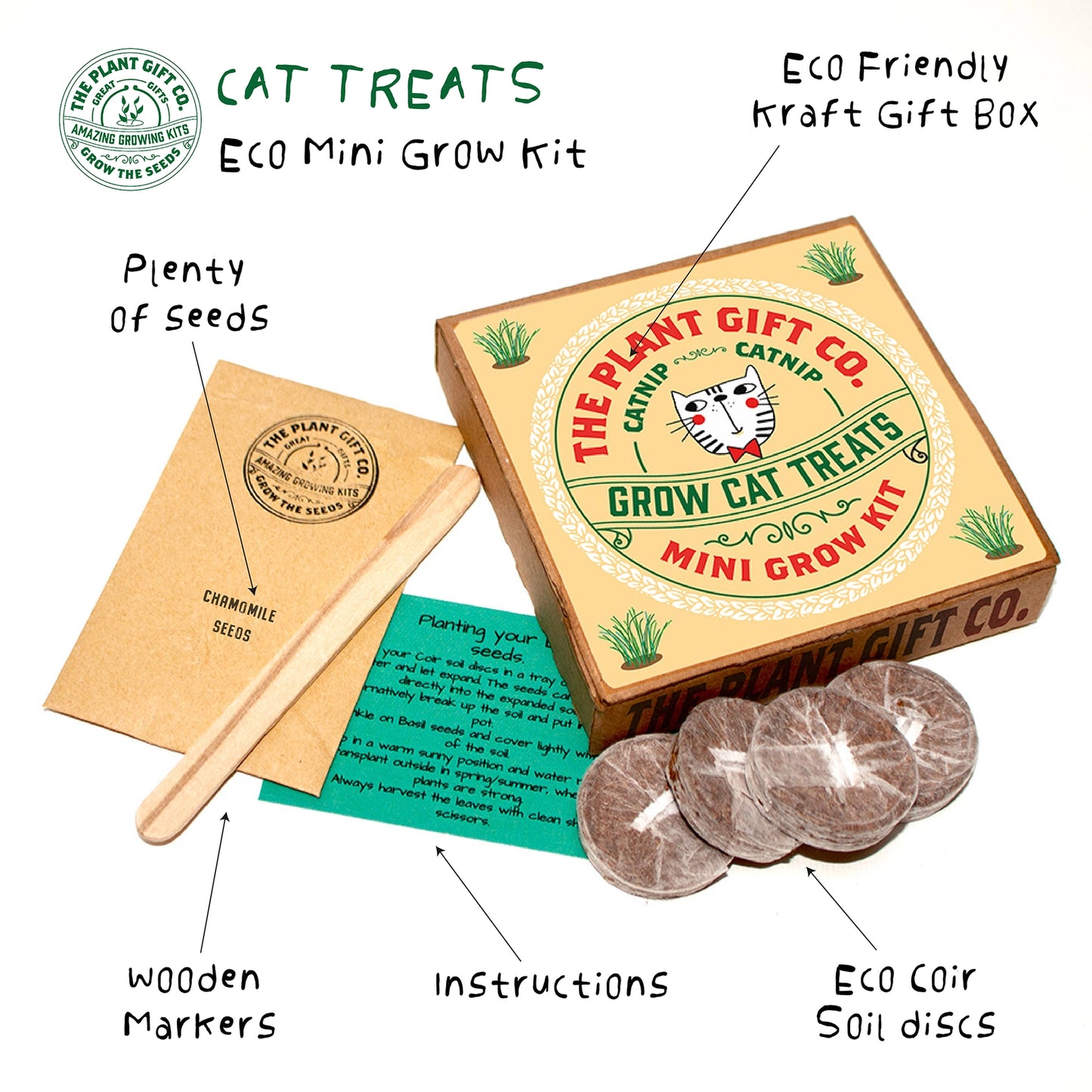
- Coir soil discs: expand fully when watered, peat-free growing medium
- Wooden plant markers included
- Step-by-step growing guide included
- Germinates in 7 to 14 days
- First harvest typically 8 to 10 weeks from sowing
- Hardy perennial: comes back year after year once established
- Around 70 to 80 percent of cats react to catnip
- Recyclable packaging, no plastic waste
What Catnip Actually Does
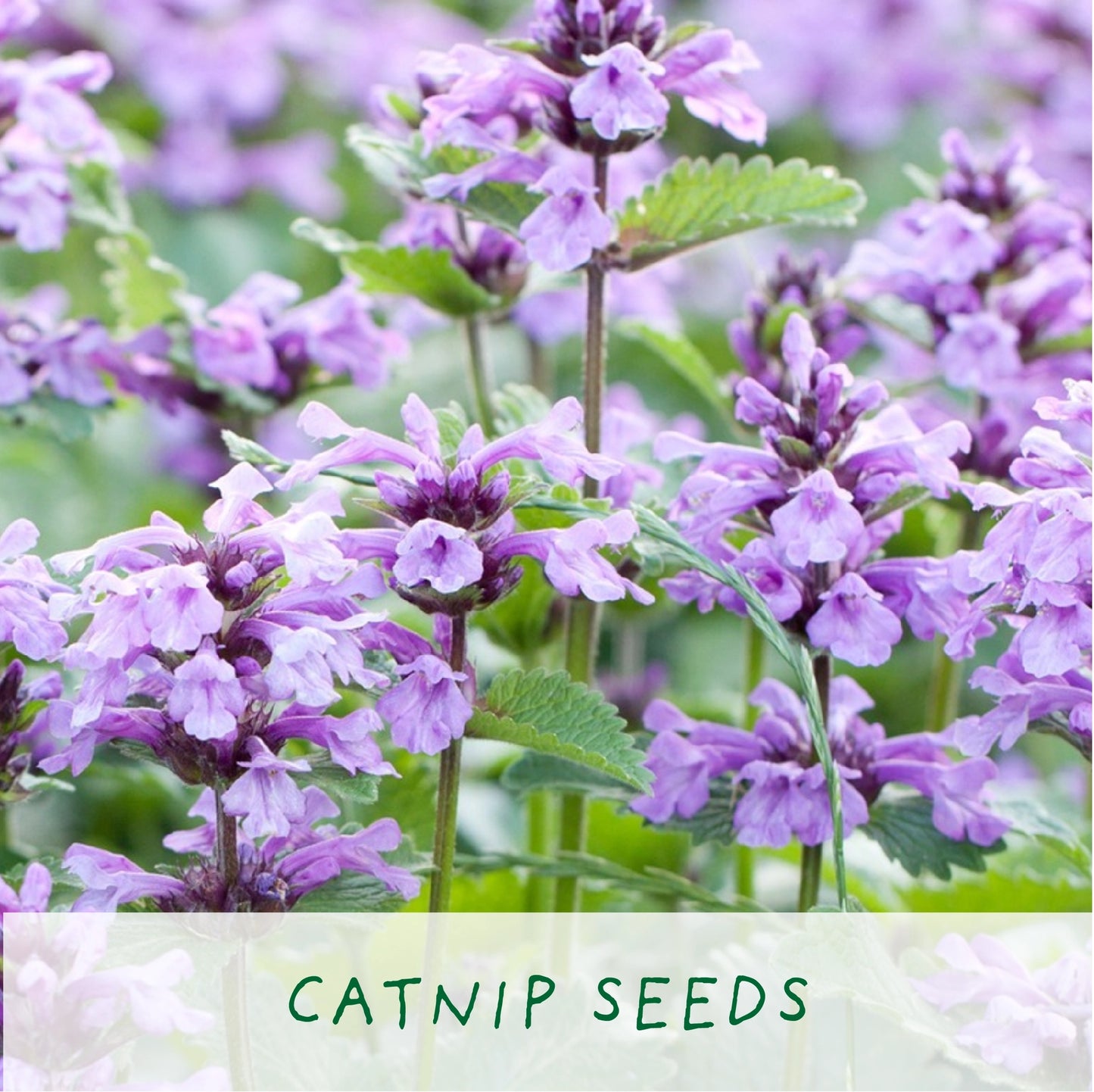
Nepeta cataria, commonly known as catnip or catmint, is a perennial herb in the mint family. When the leaves or stems are crushed, bruised, or chewed, the plant releases a compound called nepetalactone. In cats that are genetically sensitive to it, this triggers a short, intense response: rolling, rubbing, vocalising, and a kind of focused, playful euphoria that typically lasts between five and fifteen minutes before wearing off completely.
The sensitivity is hereditary. Roughly 70 to 80 percent of domestic cats carry the gene that makes them respond, with kittens under six months and some older cats often showing little or no reaction. If your cat responds to catnip at all, fresh-grown catnip will produce a noticeably stronger effect than anything dried and packaged.
Fresh versus dried matters more than most cat owners realise. The nepetalactone content in fresh leaves is significantly higher than in dried, commercially processed catnip. Growing your own means access to leaves at peak potency, cut and used immediately rather than sitting in a bag losing efficacy on a shelf. It also means a continuous supply rather than a single toy or sachet that exhausts itself in a couple of sessions.
Beyond the entertainment value, catnip has genuine uses: refreshing a scratching post that has fallen out of favour, encouraging play in a lethargic or bored indoor cat, reducing anxiety in cats who find travel or vet visits stressful, and filling homemade toys with something genuinely effective. A healthy catnip plant kept on a sunny windowsill out of the cat's reach is a resource that pays for itself many times over.
What This Isn't
This is a grow kit, not a ready-to-use catnip product. There is a waiting period of eight to ten weeks between sowing and first harvest. If the need is immediate, a catnip toy will serve better in the short term whilst the plant establishes.
It is also not suitable for cats who do not react to catnip. If your cat has never shown any interest in catnip toys or dried catnip, growing your own is unlikely to change that. The response is genetic, and no quantity or quality of catnip will trigger it in cats who simply do not carry the relevant gene.
Catnip is not harmful to cats in normal use. It is non-addictive and the effect wears off naturally. However, cats who consume very large quantities may experience mild digestive upset. The typical response to a fresh leaf is rolling and sniffing rather than eating, which is entirely safe.
When It Works Best
As an ongoing supply: A single established catnip plant, harvested regularly and kept on a bright windowsill, provides leaves through the growing season and can be dried for use in winter. Far more economical and effective than replacing bought catnip toys.
For refreshing scratching posts and play areas: Rubbing a fresh catnip leaf directly onto a scratching post, cat tree, or toy reactivates interest in furniture that has been ignored. Fresh catnip is considerably more effective for this than dried.
For homemade toys: Dried catnip leaves sewn into a small fabric pouch make a toy that costs almost nothing and outperforms most bought alternatives. A plant growing on the windowsill makes this genuinely easy to maintain.
As a gift for cat owners: Thoughtful, inexpensive, and genuinely useful. Works well as a standalone gift or as part of a larger cat-themed set. Suitable for any occasion, or none in particular.
For indoor cats: Cats kept indoors benefit particularly from the stimulation catnip provides. A regular catnip session supports natural play behaviour and can reduce the boredom and lethargy that affects cats without access to outdoor hunting.
How to Grow for Best Results
Add water to the coir soil discs and allow them to expand fully before use. This takes a few minutes. Do not rush the process: fully expanded discs provide the right growing structure for germination. Fill your chosen pots with the expanded coir.
Sowing: Scatter seeds thinly across the surface of the damp coir. Catnip seeds are small and need light to germinate, so press them gently into the surface rather than covering them with soil. A light misting with water is sufficient at this stage. Placing a clear plastic bag loosely over the pot until germination creates a warm, humid microclimate that encourages sprouting.
Light and warmth: Catnip germinates best at temperatures between 18 and 21 degrees. A warm, bright windowsill is ideal. Full sun to partial shade suits the plant once established. Direct afternoon sun through glass can scorch seedlings, so a position with morning sun and some afternoon shade is preferable in summer.
Germination typically occurs within 7 to 14 days. Once seedlings appear and reach a few centimetres in height, remove the bag and allow them to acclimatise to normal conditions. At this stage, thin the seedlings to avoid overcrowding, keeping the strongest plant per pot.
Watering: Keep the coir consistently moist but not waterlogged. Catnip is reasonably drought-tolerant once established but does not thrive in soggy conditions. Allow the surface to dry slightly between waterings.
Harvesting: Leaves are ready to harvest from around 8 to 10 weeks after sowing, once the plant is well established and at least 20cm tall. Pinch off stems just above a leaf node to encourage bushy regrowth. Take no more than a third of the plant at once. For maximum potency, harvest leaves just before the plant flowers.
Drying for storage: Tie small bunches of stems and hang in a warm, well-ventilated spot for one to two weeks. Once fully dry, crumble leaves from stems and store in an airtight jar away from light. Dried catnip keeps for up to six months before losing significant potency.
As a perennial: Once established, catnip will die back in winter and regrow in spring. Cut the plant back to a few centimetres above the soil in autumn. Bring indoors if grown in a pot, or mulch the base if planted outside. The following season's growth will be stronger than the first year's.
Keeping it away from cats: Until you are ready to harvest, keep the growing pot out of reach. A curious cat will flatten a young catnip plant long before it has a chance to establish. A high shelf, a room the cat cannot access, or a hanging position works well.
Perfect For
- Cat owners who want a constant supply of fresh catnip without ongoing cost
- Refreshing scratching posts, cat trees, and play furniture that has lost its appeal
- Filling homemade cat toys with something genuinely effective
- Gifts for cat lovers: birthdays, housewarmings, or any occasion
- Indoor cats who need additional stimulation and enrichment
- Reducing anxiety around travel, vet visits, or environmental changes
- Anyone who has bought catnip toys and found them underwhelming
- First-time growers: straightforward to germinate and maintain
What Makes This Different
Most catnip toys and sachets use dried, commercially processed catnip that has already lost much of its nepetalactone content by the time it reaches the shelf. Growing your own puts the freshest, most potent catnip directly in your hands, cut and used at the moment it works best.
The Plant Gift Co. batch-test every seed variety to ensure strong germination rates, which matters considerably for a kit sold as a complete solution. Coir is used rather than peat, which expands reliably and provides good drainage without the compaction that can impede seedling root development. The kit is self-contained: no sourcing of pots or compost separately, no guesswork about what to buy.
At £6.00, it is also one of the most straightforwardly good-value things on this site. A single healthy catnip plant, properly maintained, will produce more usable catnip than dozens of bought toys and will continue to do so for years.
Realistic Expectations
Not every seed germinates. Even from a high-quality batch, germination rates of 70 to 80 percent are considered excellent. Sowing more seeds than you need per pot accounts for this: thin to the strongest seedling once they appear.
The first season's plant will be smaller than subsequent years. As a perennial, catnip grows more vigorously from the second season onwards once the root system is well established. The first year is the foundation.
If your cat does not react to catnip, this kit will produce a pleasant, aromatic herb plant that also happens to repel aphids and attract pollinators in the garden. It is not wasted, simply differently appreciated.
What's Included
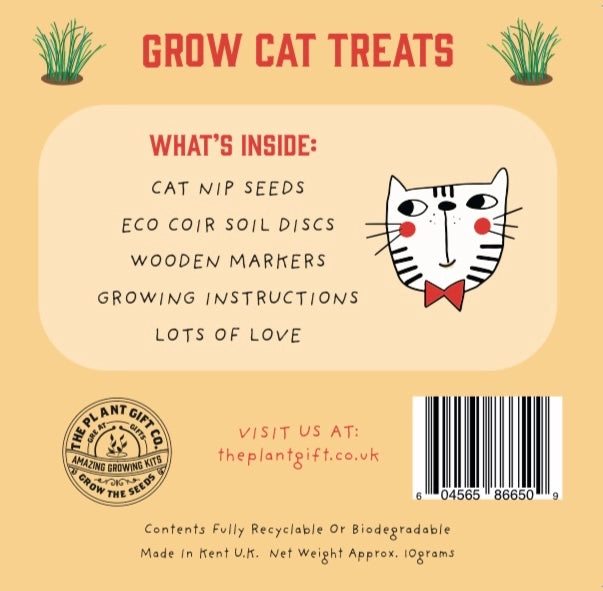
- Batch-tested catnip seeds (Nepeta cataria), enough for multiple plants
- Coir soil discs (expand when watered)
- Wooden plant markers
- Step-by-step growing guide
- Recyclable packaging
Additional Product Details
By: The Plant Gift Co.
Plant type: Hardy perennial (Nepeta cataria)
Best sowing time: March through July, or early autumn indoors
Germination: 7 to 14 days
Time to first harvest: 8 to 10 weeks from sowing
Growing medium: Peat-free coir
Seeds: Batch-tested for germination rate
Packaging: Recyclable, no plastic
Catnip is safe for cats in normal use and is non-addictive. Very large quantities consumed may cause mild digestive upset. Keep growing plants out of reach of cats until ready to harvest. Not suitable for use with cats under six months. If your cat has no history of responding to catnip, the genetic sensitivity may be absent.
Share